Place · Thiruvarur, Tamil Nadu, India
Karpaganatharkulam Karpaganathar Temple
Karpaganatharkulam Karpaganathar Temple
The kathas of Karpaganatharkulam Karpaganathar Temple: Sthala Purana, Folk legend — 2 stories cited to the Puranas, epics, recorded history and living tradition. The place is in Thiruvarur, Tamil Nadu, India. KathaYatra keeps them here in Hindi and English, free to read.
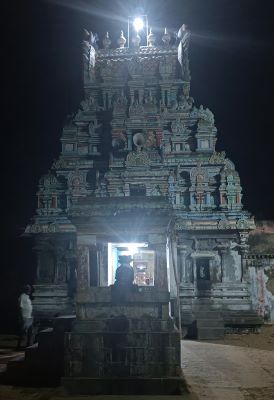
- State
- Tamil Nadu
- District
- Thiruvarur
- Altitude
- 3 m · 10 ft
- Coordinates
- 10.420°N, 79.590°E
Sthala Purana 1
स्थल-पुराणKarpaganatharkulam Karpaganathar Temple — The Wish-Tree Lord of the Six-Sided Stone
कर्पगनाथरकुलम कर्पगनाथर मंदिर — षट्कोणीय शिला के कल्पवृक्ष देवता
Tevaram era (7th–8th century CE, per Tirugnanasambandar's hymn)
This village once bore a different name — Tirukadikulam — before its people began calling their Shiva by the name he carries today: Karpaganathar, "Lord of the Wish-Fulfilling Tree." Karpaka, in Tamil devotional imagination, is no ordinary tree; it is the celestial kalpavriksha, the one that withholds nothing a sincere heart asks of it. To name a Shiva after it is to declare that this god, too, refuses no honest devotee.
What makes the shrine unusual even among the 275 Paadal Petra Sthalams is its moolavar itself: the lingam here is hexagonal, a six-sided stone rather than the smooth round form found almost everywhere else in Tamil Nadu. No surviving record fully explains why — only that the shape was sacred enough, and the temple old enough, for Tirugnanasambandar to sing of it in his Tevaram, sealing its place among the sanctified shrines. Beside Karpaganathar stands his consort, worshipped here as Balasundari, "the ever-youthful beauty," Parvati in her gentlest aspect.
Between the wish-tree's name and the six-sided stone, this modest village temple holds two mysteries the surviving verses only gesture toward. The fuller telling — why the tree, why the hexagon — likely still lives among the priests and elders of Karpaganatharkulam, waiting to be gathered.
— as sung in the Tevaram of Tirugnanasambandar
पढ़ें हिन्दी में
इस गाँव का नाम कभी कुछ और था — तिरुकडिकुलम — इससे पहले कि यहाँ के लोग अपने शिव को आज के नाम से पुकारने लगे: कर्पगनाथर, "कल्पवृक्ष के स्वामी।" तमिल भक्ति-परंपरा में कर्पक कोई साधारण वृक्ष नहीं — यह वही स्वर्गीय कल्पवृक्ष है जो सच्चे हृदय की किसी भी माँग को अस्वीकार नहीं करता। किसी शिव को इस वृक्ष के नाम से पुकारना यह घोषित करना है कि यह देवता भी किसी सच्चे भक्त को खाली हाथ नहीं लौटाते।
275 पाडल पेत्र स्थलम् में भी यह मंदिर अपने मूलवर के कारण विशिष्ट है: यहाँ का शिवलिंग षट्कोणीय है — तमिलनाडु में लगभग हर जगह मिलने वाले चिकने, गोल रूप से भिन्न, छह भुजाओं वाला पाषाण। कोई बचा हुआ अभिलेख यह पूरी तरह नहीं बताता कि क्यों — बस इतना निश्चित है कि यह आकार इतना पवित्र और यह मंदिर इतना प्राचीन था कि तिरुज्ञानसंबंधर ने अपने तेवारम् में इसका गान किया, इसे पवित्र मंदिरों की श्रृंखला में सदा के लिए जोड़ते हुए। कर्पगनाथर के साथ विराजमान हैं उनकी अर्धांगिनी, यहाँ बालसुंदरी — "सदा युवा सुंदरी" — पार्वती के इस सौम्यतम रूप में पूजित हैं।
कल्पवृक्ष के नाम और षट्कोणीय पाषाण के बीच, यह विनम्र गाँव-मंदिर दो रहस्य समेटे है, जिनकी ओर बचे हुए पद केवल संकेत करते हैं। वृक्ष क्यों, षट्कोण क्यों — इसकी पूर्ण कथा शायद आज भी कर्पगनाथरकुलम के पुजारियों और बुज़ुर्गों की स्मृति में जीवित है, संग्रहित होने की प्रतीक्षा में।
— तिरुज्ञानसंबंधर के तेवारम् के अनुसार
Sources
- Tirugnanasambandar, Tevaram
Folk legend 1
लोक-कथाKarpaganatharkulam Karpaganathar Temple — The Six Sides Nobody Explains
कर्पगनाथरकुलम कर्पगनाथर मंदिर — छह दिशाएँ जिनका रहस्य कोई नहीं बताता
local tradition
Even the fuller telling of Karpaganathar admits it plainly: no surviving record explains why the lingam here is hexagonal, six-sided, unlike almost any other in Tamil Nadu. That silence is, in its own way, the local tradition worth recording — not a myth invented to fill the gap, but the honest shape of what villagers here are actually asked, and what they actually say.
Visitors who inquire are told, simply, that the six sides are held sacred exactly because they are unexplained — that the shape itself is proof of an age and an origin older than any story now told about it, and that questioning it too hard misses the point of what makes it holy. It is treated less as a puzzle to be solved than as a mystery to be respected, alongside the wish-fulfilling tree, karpaka, for which the god and the village are both named.
Between an unexplained stone and a tree that grants what is asked of it, Karpaganatharkulam keeps a modest, honest silence where a grander legend might once have stood — one likely still held, in fuller form, by the priests and elders who tend this shrine.
— local tradition of Karpaganatharkulam
पढ़ें हिन्दी में
कर्पगनाथर की विस्तृत कथा भी इसे स्पष्ट रूप से स्वीकार करती है: कोई बचा हुआ अभिलेख यह नहीं बताता कि यहाँ का शिवलिंग षट्कोणीय क्यों है, तमिलनाडु में लगभग किसी और मंदिर से भिन्न। यह मौन भी, अपने ढंग से, वह स्थानीय परंपरा है जिसे दर्ज करना उचित है — कोई गढ़ी हुई कथा नहीं, बल्कि यह ईमानदार सच्चाई कि यहाँ के गाँववासियों से वास्तव में क्या पूछा जाता है, और वे वास्तव में क्या उत्तर देते हैं।
पूछने वाले तीर्थयात्रियों को सीधे बताया जाता है कि यह छह भुजाएँ इसलिए पवित्र मानी जाती हैं क्योंकि इनकी व्याख्या नहीं है — कि यह आकार स्वयं ऐसे युग और उद्गम का प्रमाण है जो आज कही जाने वाली किसी भी कथा से पुराना है, और इसे बहुत अधिक प्रश्न करना उस बात को चूक जाना है जो इसे पवित्र बनाती है। इसे सुलझाई जाने वाली पहेली से अधिक, आदर किए जाने वाला एक रहस्य माना जाता है — उस कल्पवृक्ष, कर्पक, के साथ, जिसके नाम पर देवता और गाँव दोनों का नामकरण हुआ।
एक अस्पष्ट पाषाण और एक ऐसे वृक्ष के बीच जो माँगी गई हर इच्छा पूरी करता है, कर्पगनाथरकुलम एक विनम्र, ईमानदार मौन सहेजे है जहाँ कभी कोई भव्य कथा रही होगी — जो संभवतः आज भी, अधिक पूर्ण रूप में, इस मंदिर की सेवा करने वाले पुजारियों और बुज़ुर्गों के पास सुरक्षित है।
— कर्पगनाथरकुलम की स्थानीय परंपरा
Sources
- local tradition
Keep reading
Paadal Petra Sthalam circuit
- 108 Divya desams
- Aakkoor Thanthondreeswarar Temple
- Aavoor Pasupatheeswaram temple
- Abirameswarar temple
- Achalpuram Shivalokathyagar Temple
- Adhi Ratneswarar Temple
- Adi Kumbeswarar Temple
- Agastheeswarar Temple