Place · Pudukkottai, Tamil Nadu, India
Vanchinadha Swamy Temple
Vanchinadha Swamy Temple
The kathas of Vanchinadha Swamy Temple: Sthala Purana, Folk legend — 2 stories cited to the Puranas, epics, recorded history and living tradition. The place is in Pudukkottai, Tamil Nadu, India. KathaYatra keeps them here in Hindi and English, free to read.
- State
- Tamil Nadu
- District
- Pudukkottai
- Altitude
- 131 m · 430 ft
- Coordinates
- 10.483°N, 78.683°E
Sthala Purana 1
स्थल-पुराणVanchinadha Swamy Temple — The Lord Who Stopped Death at the Village Edge
वंचिनाथ स्वामी मंदिर — गाँव की सीमा पर मृत्यु को रोकने वाले प्रभु
Tevaram era (7th century CE, per Appar and Sambandar's hymns); present structure 11th century Chola, expanded 16th century under the Nayaks
A sage named Sarva, deep in penance, once received a warning: that dharma itself would decay in the age of Kali Yuga to come. Terrified, he fled toward this village, crying out in prayer as he ran, with Yama, lord of death, close behind him. At the village's boundary, Shiva himself intervened, halting Yama and taking on the name Vanchinathar — the Lord who protects the boundary of Srivanchiyam — so that the sage's flight ended in refuge rather than in death's grasp.
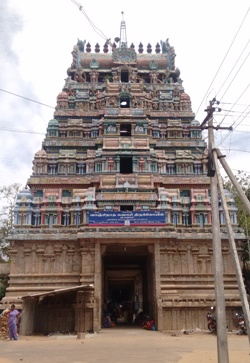
It is a fitting legend for a temple that still shelters a rare shrine to Yama within its walls, an unusual honor for the very god this story shows being turned back. Beside Vanchinadha Swamy presides the goddess Mangalambigai, also called Mangala Nayagi. By the seventh century, Appar had already composed nine poems in the fifth Tirumurai calling the deity Kumbesar, and Sambandar sang of the shrine in the third Tirumurai, sealing its place among the Paadal Petra Sthalams. The Cholas built the current stone temple in the eleventh century; the Thanjavur Nayaks expanded it further in the sixteenth, raising the eleven-story, 108-foot eastern gopuram that still marks the village today.
— as sung in the Tevaram of Appar and Sambandar; sthala purana per local tradition
पढ़ें हिन्दी में
सर्व नाम के एक ऋषि, गहन तपस्या में लीन, को एक चेतावनी मिली — कि आने वाले कलियुग में स्वयं धर्म क्षीण हो जाएगा। भयभीत होकर वे इस गाँव की ओर भागे, दौड़ते हुए प्रार्थना पुकारते रहे, मृत्यु के देवता यम उनके पीछे थे। गाँव की सीमा पर, स्वयं शिव ने हस्तक्षेप किया, यम को रोका और वंचिनाथर नाम धारण किया — वह स्वामी जो श्रीवंचियम् की सीमा की रक्षा करते हैं — ताकि ऋषि की उड़ान मृत्यु की पकड़ में नहीं, शरण में समाप्त हो।
यह उस मंदिर के लिए उपयुक्त कथा है जो आज भी अपनी दीवारों के भीतर यम का एक दुर्लभ मंदिर सहेजे है — उसी देवता के लिए एक असामान्य सम्मान जिसे यह कथा वापस लौटते हुए दिखाती है। वंचिनाथ स्वामी के साथ देवी मंगलांबिगाई विराजमान हैं, जिन्हें मंगला नायगी भी कहा जाता है। सातवीं शताब्दी तक अप्पर पाँचवें तिरुमुरै में देवता को कुम्बेसर नाम से नौ पद रच चुके थे, और संबंदर ने तीसरे तिरुमुरै में इस मंदिर का गान किया, जिसने इसे पाडल पेत्र स्थलम् में स्थान दिलाया। चोल राजाओं ने ग्यारहवीं शताब्दी में वर्तमान पत्थर का मंदिर बनवाया; तंजावुर के नायकों ने सोलहवीं शताब्दी में इसका और विस्तार किया, ग्यारह मंज़िला, 108 फीट ऊँचा पूर्वी गोपुर खड़ा करते हुए जो आज भी गाँव को चिह्नित करता है।
— अप्पर और संबंदर के तेवारम् के अनुसार; स्थलपुराण स्थानीय परंपरा अनुसार
Sources
- Tevaram of Appar, 5th Tirumurai (9 poems) and Sambandar, 3rd Tirumurai
- Local sthala purana of Sage Sarva and Yama
Folk legend 1
लोक-कथाVanchinadha Swamy Temple — The Wife Who Walked Out of Vaikuntha
वंचिनाथ स्वामी मंदिर — पत्नी जो वैकुंठ छोड़कर चली आई
living tradition
Sage Sarva's flight from Yama, and Shiva's mercy at the village boundary, explain why this Lord is called Vanchinathar — protector of Srivanchiyam's edge. Tradition holds a second story too, gentler and stranger, about the "Sri" in the village's own name.
It is said that Lakshmi and Vishnu once quarrelled, seriously enough that Lakshmi left Vaikuntha altogether and came down to this earth alone. Vishnu, tradition says, followed her — not straight to her, but searching, until he came upon a sandalwood forest and, within it, a Linga he began to worship. The village that grew around that search took its name from Lakshmi herself, who in this region is called simply Sri — Srivanchiyam, the place where a god's search for his consort put down roots.
The temple's Gupta Gangai tank carries its own quiet honour inside this same tradition: it is held here that Ganga herself comes to bathe in these waters to cleanse her own sins, and that a single dip taken by a pilgrim in this tank equals one taken at Kashi. Every Sunday in the month of Kaarththigai, tradition holds, the ritual of Theerthavari is performed here — sacred water offered back to the tank that is said to purify even a river.
— as locally held at Srivanchiyam, alongside the Tevaram of Appar and Sambandar
पढ़ें हिन्दी में
ऋषि सर्व का यम से भागना, और गाँव की सीमा पर शिव की करुणा, बताते हैं कि इस स्वामी को वंचिनाथर — श्रीवंचियम् की सीमा के रक्षक — क्यों कहा जाता है। परंपरा एक दूसरी कथा भी रखती है, अधिक कोमल और विचित्र, गाँव के अपने नाम में छिपे "श्री" के बारे में।
कहा जाता है कि लक्ष्मी और विष्णु के बीच कभी इतना गंभीर विवाद हुआ कि लक्ष्मी वैकुंठ छोड़कर अकेली इस पृथ्वी पर उतर आईं। विष्णु, परंपरा कहती है, उनके पीछे चले — सीधे उनके पास नहीं, बल्कि खोजते हुए, जब तक वे एक चंदन-वन तक नहीं पहुँचे और उसमें एक लिंग पाकर उसकी पूजा आरंभ की। उस खोज के चारों ओर बसे गाँव ने अपना नाम स्वयं लक्ष्मी से लिया, जिन्हें इस क्षेत्र में केवल "श्री" कहा जाता है — श्रीवंचियम्, वह स्थान जहाँ एक देवता की अपनी संगिनी की खोज ने जड़ें जमाईं।
मंदिर का गुप्त गंगई तालाब इसी परंपरा के भीतर अपना शांत सम्मान रखता है: यहाँ माना जाता है कि स्वयं गंगा अपने पापों को धोने के लिए इस जल में स्नान करने आती हैं, और इस तालाब में एक तीर्थयात्री का एक स्नान काशी में लिए गए स्नान के बराबर है। हर वर्ष कार्तिगई मास के हर रविवार, परंपरा कहती है, यहाँ तीर्थवारी की रीति निभाई जाती है — पवित्र जल उसी तालाब को वापस अर्पित किया जाता है जो कहा जाता है कि एक नदी को भी शुद्ध कर सकता है।
— श्रीवंचियम् की स्थानीय परंपरा के अनुसार, अप्पर और संबंदर के तेवारम् के साथ
Sources
- Local legend of Lakshmi's departure from Vaikuntha and Vishnu's discovery of the Linga in a sandalwood forest, explaining the name Srivanchiyam
- Gupta Gangai tank tradition, held equivalent to a holy dip at Kashi — local belief
Keep reading
Paadal Petra Sthalam circuit
- 108 Divya desams
- Aakkoor Thanthondreeswarar Temple
- Aavoor Pasupatheeswaram temple
- Abirameswarar temple
- Achalpuram Shivalokathyagar Temple
- Adhi Ratneswarar Temple
- Adi Kumbeswarar Temple
- Agastheeswarar Temple