Place · Mayiladuthurai, Tamil Nadu, India
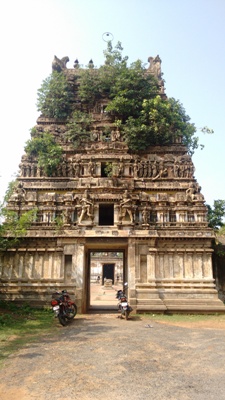
Uchira Vaneswarar Temple
Uchira Vaneswarar Temple
The kathas of Uchira Vaneswarar Temple: Sthala Purana, Folk legend — 2 stories cited to the Puranas, epics, recorded history and living tradition. The place is in Mayiladuthurai, Tamil Nadu, India. KathaYatra keeps them here in Hindi and English, free to read.
- State
- Tamil Nadu
- District
- Mayiladuthurai
- Altitude
- 12 m · 39 ft
- Coordinates
- 11.106°N, 79.707°E
Sthala Purana 1
स्थल-पुराणUchira Vaneswarar Temple — The Landlord Who Guards the Riverbank
उच्चिर वनेश्वरर मंदिर — नदी तट के रक्षक भूस्वामी
Tevaram era (7th–8th century CE, per Tirugnanasambandar's hymn)
This temple in Tiruvila Nagar carries two names, and each tells a different part of its story. To the wider Tevaram canon, Shiva here is Uchira Vaneswarar. To the village itself, he is remembered under a warmer, more local title — Thurai Kattum Vallalar, "the generous lord who shows the river landing." A thurai is a ghat, a crossing-place on the water; to be the one who kattum, who reveals or guards it, is to be a protector not of temple ritual alone but of the ordinary, daily crossing of the sacred Kaveri that runs past this shrine.
Tirugnanasambandar's verses on this temple return again and again to that river — his hymn ties the god directly to the Kaveri's sanctity, describing the spiritual merit that awaits any devotee who worships here beside its waters. That connection, sung in the seventh or eighth century, was enough to place Tiruvila Nagar among the 275 Paadal Petra Sthalams.
Beside Uchira Vaneswarar stands his consort, worshipped as Veyuru Tholi Ammai, "the Mother of the bamboo-slender shoulders." A separate shrine within the complex honors Nataraja, Shiva in his form as cosmic dancer, keeping the temple's devotion layered even beyond its river-guarding lord.
— as sung in the Tevaram of Tirugnanasambandar
पढ़ें हिन्दी में
तिरुविलानगर के इस मंदिर के दो नाम हैं, और हर नाम इसकी कथा का अलग भाग सुनाता है। व्यापक तेवारम् संग्रह में यहाँ के शिव उच्चिर वनेश्वरर हैं। गाँव में स्वयं वे एक अधिक आत्मीय, स्थानीय उपाधि से स्मरण किए जाते हैं — थुरै कट्टुम् वल्ललर, "वह उदार स्वामी जो नदी-घाट दिखाते हैं।" थुरै का अर्थ है घाट, जल पर पार करने का स्थान; और जो कट्टुम् है, जो उसे प्रकट या रक्षित करता है, वह केवल मंदिर-अनुष्ठान का नहीं बल्कि इस मंदिर के पास बहती पवित्र कावेरी को रोज़ पार करने वालों का भी रक्षक है।
तिरुज्ञानसंबंधर के इस मंदिर पर पद बार-बार उसी नदी की ओर लौटते हैं — उनका भजन देव को सीधे कावेरी की पवित्रता से जोड़ता है, उस पुण्य का वर्णन करते हुए जो उसके जल के निकट यहाँ आराधना करने वाले हर भक्त की प्रतीक्षा करता है। सातवीं या आठवीं शताब्दी में गाया गया यह संबंध तिरुविलानगर को 275 पाडल पेत्र स्थलम् में स्थान दिलाने के लिए पर्याप्त था।
उच्चिर वनेश्वरर के साथ उनकी अर्धांगिनी विराजमान हैं, जो वेयुरु थोलि अम्मै के नाम से पूजित हैं, "बाँस-सी कोमल कंधों वाली माता।" परिसर के भीतर एक पृथक मंदिर नटराज को समर्पित है, शिव का वह रूप जो ब्रह्मांडीय नर्तक है — इस मंदिर की भक्ति को उसके नदी-रक्षक स्वामी से परे भी परतदार बनाते हुए।
— तिरुज्ञानसंबंधर के तेवारम् के अनुसार
Sources
- Tirugnanasambandar, Tevaram
Folk legend 1
लोक-कथाUchira Vaneswarar Temple — The Dancer Kept Apart from the River-Guardian
उच्चिर वनेश्वरर मंदिर — नर्तक, जो नदी-रक्षक से पृथक रखा गया
local tradition
Thurai Kattum Vallalar, the generous lord who shows the river landing, is the story every visitor to Tiruvila Nagar hears about the Kaveri and this temple's protective bond with it. Held separately, in a shrine of its own within the same complex, is a form of Shiva rarely paired so closely with a river-guardian: Nataraja, the cosmic dancer.
Local worshippers are said to hold that these two forms of the same god are kept deliberately apart within the temple — the river-lord watching over the ordinary crossing of the Kaveri outside, the dancer holding, within his own separate sanctum, the older and stranger cosmic rhythm that has nothing to do with any river at all. Visitors are told, when they ask, that a god who guards a ghat and a god who dances the universe into being are both true at once, but that the temple keeps a respectful distance between the two — one sanctum for the daily, one for the eternal.
What began this particular arrangement, or why Nataraja is honoured here at all rather than at a temple built solely for him, has not come down in any easily found record. Only the custom of visiting both, in their separate corners, has.
— local tradition of Tiruvila Nagar
पढ़ें हिन्दी में
थुरै कट्टुम् वल्ललर, वह उदार स्वामी जो नदी-घाट दिखाते हैं — यही वह कथा है जो तिरुविलानगर आने वाला हर दर्शनार्थी कावेरी और इस मंदिर के उससे जुड़े रक्षक-बंधन के विषय में सुनता है। इसी परिसर में, एक पृथक मंदिर में, शिव का एक ऐसा रूप भी अलग से रखा गया है जो किसी नदी-रक्षक के इतने निकट कम ही पाया जाता है: नटराज, ब्रह्मांडीय नर्तक।
यहाँ के भक्त कहा जाता है यह मानते हैं कि एक ही देवता के ये दो रूप मंदिर के भीतर जान-बूझकर पृथक रखे गए हैं — नदी-स्वामी बाहर कावेरी के साधारण पार होने की रखवाली करते हैं, जबकि नर्तक, अपने अलग गर्भगृह में, वह प्राचीनतर और अधिक विचित्र ब्रह्मांडीय लय थामे रहते हैं जिसका किसी नदी से कोई संबंध नहीं। पूछने पर दर्शनार्थियों को बताया जाता है कि एक घाट की रखवाली करने वाला देव और सृष्टि को नृत्य में रचने वाला देव, दोनों एक साथ सत्य हैं, पर मंदिर दोनों के बीच एक सम्मानजनक दूरी बनाए रखता है — एक गर्भगृह दैनंदिन के लिए, एक शाश्वत के लिए।
यह विशेष व्यवस्था कैसे आरंभ हुई, या नटराज का यहाँ सम्मान क्यों है जबकि उनके लिए विशेष मंदिर अन्यत्र भी बने हैं, यह किसी सहज उपलब्ध अभिलेख में सुरक्षित नहीं — बस दोनों को उनके पृथक कोनों में भेंटने की रीति सुरक्षित है।
— तिरुविलानगर की स्थानीय परंपरा
Sources
- local tradition
Keep reading
Paadal Petra Sthalam circuit
- 108 Divya desams
- Aakkoor Thanthondreeswarar Temple
- Aavoor Pasupatheeswaram temple
- Abirameswarar temple
- Achalpuram Shivalokathyagar Temple
- Adhi Ratneswarar Temple
- Adi Kumbeswarar Temple
- Agastheeswarar Temple