Place · Thiruvarur, Tamil Nadu, India
Tirukkollampudur Vilvaranyeswarar Temple
Tirukkollampudur Vilvaranyeswarar Temple
The kathas of Tirukkollampudur Vilvaranyeswarar Temple: Sthala Purana, Folk legend — 2 stories cited to the Puranas, epics, recorded history and living tradition. The place is in Thiruvarur, Tamil Nadu, India. KathaYatra keeps them here in Hindi and English, free to read.
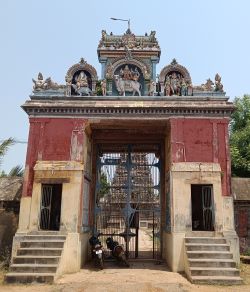
- State
- Tamil Nadu
- District
- Thiruvarur
- Altitude
- 23 m · 75 ft
- Coordinates
- 10.814°N, 79.460°E
Sthala Purana 1
स्थल-पुराणTirukkollampudur Vilvaranyeswarar Temple — One of the Five Forest Shrines
तिरुक्कोल्लम्पुदूर विल्वारण्येश्वरर मंदिर — पाँच वन मंदिरों में एक
Tevaram era (7th century CE, per Tirugnanasambandar's hymn)
Before it was Tirukollampudur, this village was called Koovilambur, and before that, tradition remembers it simply as forest — one of five wooded tracts in the Thanjavur-Kumbakonam-Tiruvarur region sacred enough to give rise to temples now grouped together as the Pancha Aranya Sthalams. This particular grove was of vilva, the bael tree whose leaves are Shiva's own, and so the lingam that rose here came to be worshipped as Vilvaranyeswarar — the Lord of the Vilva forest.
Beside him presides the goddess Soundara Nayaki, "she of beautiful speech." By the seventh century, Tirugnanasambandar had sung of this shrine in his Tevaram, folding a forest sanctuary into the same canon that celebrates the great temple-cities of the Kaveri delta — proof that in the world the Nayanars sang, sanctity did not require grandeur, only the right tree and the right god beneath it. What has faded, as with so many of the smaller Paadal Petra Sthalams, is the fuller local telling of how this particular vilva grove first came to be recognized as holy ground; that memory, if it survives, belongs to the village's own priests.
— as sung in the Tevaram of Tirugnanasambandar
पढ़ें हिन्दी में
तिरुकोल्लमपुदुर बनने से पहले यह गाँव कूविलम्बूर कहलाता था, और उससे भी पहले, परंपरा इसे केवल वन के रूप में स्मरण करती है — तंजावुर-कुंभकोणम्-तिरुवरूर क्षेत्र के पाँच वनाच्छादित भूखंडों में से एक, इतने पवित्र कि इनसे मंदिर उठे जो आज पंच अरण्य स्थलम् के नाम से एक साथ गिने जाते हैं। यह विशेष उपवन विल्व का था, वह बेल वृक्ष जिसकी पत्तियाँ स्वयं शिव की मानी जाती हैं, और इसलिए यहाँ उठा शिवलिंग विल्वारण्येश्वरर — विल्व वन के स्वामी — के रूप में पूजित होने लगा।
उनके साथ देवी सुंदरा नायकी विराजमान हैं, "सुंदर वाणी वाली।" सातवीं शताब्दी तक तिरुज्ञानसंबंदर अपने तेवारम् में इस मंदिर का गान कर चुके थे, एक वन-मंदिर को उसी सूची में समेटते हुए जो कावेरी डेल्टा के महान मंदिर-नगरों का उत्सव मनाती है — यह प्रमाण कि नायनारों के गाए संसार में पवित्रता के लिए भव्यता आवश्यक नहीं थी, केवल सही वृक्ष और उसके नीचे सही देवता। जो धुँधला पड़ गया है, कई छोटे पाडल पेत्र स्थलम् की भाँति, वह है इस विशेष विल्व उपवन के पवित्र भूमि के रूप में पहचाने जाने की पूर्ण स्थानीय कथा; वह स्मृति, यदि बची है, तो गाँव के अपने पुजारियों के पास है।
— तिरुज्ञानसंबंदर के तेवारम् के अनुसार
Sources
- Tevaram of Tirugnanasambandar
- Local tradition of the Pancha Aranya Sthalams (five forest shrines)
- Note: this temple's location and deity name (Vilvaranyeswarar) closely match Q12975971, Pereyil Jagadeeswarar Temple — the two Wikidata entries may describe the same physical shrine under different names
Folk legend 1
लोक-कथाTirukkollampudur Vilvaranyeswarar Temple — The Goddess of Beautiful Speech
तिरुक्कोल्लमपुदूर विल्वारण्येश्वरर मंदिर — मधुर वाणी की देवी
local tradition
The bael forest that gave Vilvaranyeswarar his name is the story every record repeats. Soundara Nayaki, the goddess beside him, is given only a name in translation — "she of beautiful speech" — and it is around that name, local worshippers say, that a small, still-living custom has formed.
Because her name honours speech itself rather than beauty of form, tradition holds that Soundara Nayaki is quietly approached here by those anxious before an exam, an important conversation, or any occasion where the right words matter — students and speakers among them, seeking not strength or wealth but simply the grace to say the true thing clearly when it counts. No fuller legend explaining how she came to bear this particular name survives in any record easily found; only the custom of turning to her for this one, specific kind of help does.
It is the smallest sort of local devotion a forest shrine can carry — not a myth of the goddess's arrival, but a modern trust placed in an old name, kept faithfully in a village whose deeper history has otherwise faded into a single line about a bael grove.
— local tradition of Tirukollampudur
पढ़ें हिन्दी में
विल्व वन, जिसने विल्वारण्येश्वरर को उनका नाम दिया, वह कथा है जो हर अभिलेख दोहराता है। सुंदरा नायकी, उनके साथ विराजमान देवी, को केवल अनुवाद में एक नाम दिया गया है — "सुंदर वाणी वाली" — और इसी नाम के इर्द-गिर्द, स्थानीय भक्त कहते हैं, एक छोटी, आज भी जीवित रीत बनी है।
क्योंकि उनका नाम रूप की सुंदरता नहीं, वाणी को सम्मान देता है, परंपरा कहती है कि सुंदरा नायकी के पास परीक्षा से पूर्व चिंतित, किसी महत्वपूर्ण बातचीत से पहले, या ऐसे किसी भी अवसर पर जहाँ सही शब्द मायने रखते हैं, लोग शांति से आते हैं — विद्यार्थी और वक्ता उनमें शामिल — बल या धन नहीं, बस वह कृपा माँगते हुए कि सही बात स्पष्टता से कह सकें जब वह मायने रखे। उन्हें यह विशेष नाम कैसे मिला, इसकी पूर्ण कथा किसी सहज उपलब्ध अभिलेख में सुरक्षित नहीं — बस इस विशेष सहायता हेतु उनकी ओर मुड़ने की रीति सुरक्षित है।
यह एक वन-मंदिर के पास बची सबसे छोटी प्रकार की स्थानीय भक्ति है — देवी के आगमन की कोई कथा नहीं, बल्कि एक प्राचीन नाम में रखा गया आधुनिक विश्वास, उस गाँव में निष्ठापूर्वक सहेजा गया जिसका गहरा इतिहास अन्यथा एक विल्व-उपवन की एक पंक्ति में सिमट गया है।
— तिरुकोल्लमपुदुर की स्थानीय परंपरा
Sources
- local tradition
Keep reading
Paadal Petra Sthalam circuit
- 108 Divya desams
- Aakkoor Thanthondreeswarar Temple
- Aavoor Pasupatheeswaram temple
- Abirameswarar temple
- Achalpuram Shivalokathyagar Temple
- Adhi Ratneswarar Temple
- Adi Kumbeswarar Temple
- Agastheeswarar Temple