Place · Churu, Rajasthan, India
Salasar Balaji
सालासर बालाजी
The kathas of Salasar Balaji: Folk legend — 2 stories cited to the Puranas, epics, recorded history and living tradition. The place is in Churu, Rajasthan, India. KathaYatra keeps them here in Hindi and English, free to read.
Folk legend 2
लोक-कथाSalasar Balaji — The Coconut That Carries a Promise
सालासर बालाजी — वचन ढोता हुआ नारियल
living tradition
Long after the plough struck stone in Asota, a second custom took root at Salasar — not about how Balaji was found, but about how he is asked.
It is said that a devotee's wish, spoken here, must be tied down to be believed: a coconut wrapped in red cloth, bound with a sacred thread, left within the temple precincts as a mannat — a vow, not a request. Nothing is demanded of Balaji in words alone; the coconut stays as a pledge, a promise that the devotee will return.
And return they do. Twice a year, at Chaitra Purnima and Ashwin Purnima, the roads to Salasar fill with pilgrims who walk the last stretch barefoot, some having promised exactly that when their wish was first granted — proof, tied to skin and stone, that the debt is being repaid. Among the reasons Salasar draws crowds larger than temples far older, devotees give one answer more than any other: that Balaji here listens quickly, and does not make a person wait long to know whether the coconut worked.
— as told in the living pilgrim tradition of Salasar Dham
पढ़ें हिन्दी में
असोटा में जब हल पत्थर से टकराया था, उससे आगे सालासर में एक दूसरी रीत जड़ पकड़ चुकी है — यह बालाजी के मिलने की नहीं, उनसे माँगने की कथा है।
कहा जाता है कि यहाँ बोला गया मन्नत विश्वास योग्य तभी बनता है जब वह बाँध दिया जाए — लाल कपड़े में लिपटा नारियल, मौली से बँधा, मंदिर परिसर में छोड़ दिया जाता है, केवल याचना नहीं, एक प्रण के रूप में। बालाजी से केवल शब्दों में कुछ नहीं माँगा जाता; नारियल वहीं टिका रहता है, एक वचन बनकर, कि श्रद्धालु लौटेगा।
और लौटते भी हैं। वर्ष में दो बार, चैत्र पूर्णिमा और आश्विन पूर्णिमा पर, सालासर की सड़कें उन तीर्थयात्रियों से भर जाती हैं जो अंतिम पड़ाव नंगे पैर तय करते हैं — कुछ ने ठीक यही वचन दिया था जब उनकी मुराद पहली बार पूरी हुई थी, त्वचा और पत्थर से बंधा वह प्रमाण कि ऋण चुकाया जा रहा है। सालासर की भीड़ कई पुराने मंदिरों से भी बड़ी क्यों होती है, इसका एक ही उत्तर श्रद्धालु सबसे अधिक देते हैं — यहाँ बालाजी शीघ्र सुनते हैं, और नारियल फला या नहीं, यह जानने के लिए अधिक प्रतीक्षा नहीं करानी पड़ती।
— सालासर धाम की जीवित तीर्थ-परंपरा के अनुसार
Sources
- Web-documented pilgrim tradition of Salasar Dham's mannat (coconut-and-thread) custom
- Local tradition of the Chaitra and Ashwin mela at Salasar
Salasar Balaji — The Hanuman a Farmer's Plough Struck
सालासर बालाजी — हनुमान जिन्हें किसान के हल ने छुआ
1811 CE (idol discovery, per local tradition)
In the village of Asota, a Ginthala farmer was ploughing his field when his plough struck something buried and would not move further. Digging to see what had stopped him, he uncovered a stone idol of Balaji — Hanuman. It was a Tuesday, the ninth day of Shravan, when the discovery was made; his wife had just brought his midday meal, churma among it, and in his astonishment he offered the food to the deity before he offered it to himself. That act became custom — churma is still the offering pressed into every pilgrim's hands at Salasar today.
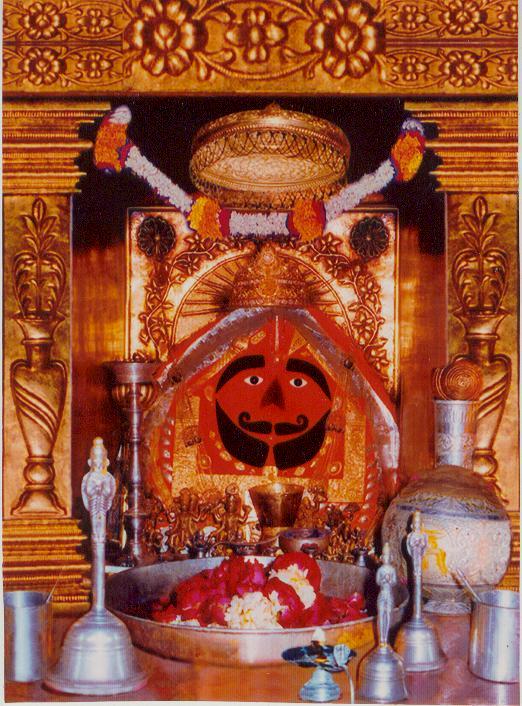
The idol did not stay in Asota. Both the local landlord and a man of Salasar named Mohandas began dreaming of Hanuman, who told Mohandas plainly to bring the image to Salasar and establish it there. He obeyed, and the temple that grew up around that instruction has since become one of Rajasthan's most visited Hanuman shrines — unusual among Hanuman idols worldwide for showing the deity bearded and moustached, a detail local tradition has never fully explained, though it is taken as proof that this is no ordinary carved image but a self-manifest form found exactly as it wished to be found.
— as told in the tradition of Asota and Salasar villages
पढ़ें हिन्दी में
असोटा गाँव में एक गिंठाला किसान अपने खेत में हल चला रहा था कि हल किसी गड़ी हुई वस्तु से टकराकर रुक गया। खोदकर देखा तो नीचे से बालाजी — हनुमान — की एक पाषाण मूर्ति निकली। यह श्रावण मास की नवमी, एक मंगलवार का दिन था; ठीक उसी समय किसान की पत्नी दोपहर का भोजन लेकर आई थी, जिसमें चूरमा भी था, और आश्चर्यचकित किसान ने वह भोग स्वयं खाने से पहले देवता को अर्पित कर दिया। यही परंपरा बन गई — आज भी सालासर आने वाले हर तीर्थयात्री के हाथ में चूरमा का प्रसाद थमाया जाता है।
पर यह मूर्ति असोटा में नहीं टिकी। स्थानीय जमींदार और सालासर के निवासी मोहनदास, दोनों को हनुमान स्वप्न में दिखने लगे, और मोहनदास को स्पष्ट आदेश मिला कि मूर्ति को सालासर लाकर वहीं स्थापित करे। मोहनदास ने आज्ञा मानी, और उसी आदेश से उठा यह मंदिर आज राजस्थान के सर्वाधिक पूजित हनुमान-धामों में गिना जाता है — विश्व भर की हनुमान मूर्तियों में यह असाधारण है, क्योंकि यहाँ देवता दाढ़ी-मूँछों सहित विराजमान हैं, एक विशेषता जिसकी व्याख्या स्थानीय परंपरा ने कभी पूरी तरह नहीं की, पर जिसे यही प्रमाण माना जाता है कि यह कोई तराशी हुई साधारण मूर्ति नहीं, स्वयंभू रूप है — जैसा पाया जाना था, वैसा ही पाया गया।
— असोटा और सालासर गाँवों की परंपरा के अनुसार
Sources
- Local tradition of Asota and Salasar villages, Rajasthan
- Temple-published history
Keep reading
More in Rajasthan
- Achaleshwar Mahadev Temple, Achalgarh
- Ambika Mata Temple, Jagat
- Arbuda Devi Temple, Mount Abu
- Beneshwar Dham
- Bhangarh Fort
- Bhomiaji Maharaj Temple, Sopra
- Brahma Temple, Pushkar
- Chamunda Mataji Temple, Mehrangarh