Place · Thanjavur, Tamil Nadu, India
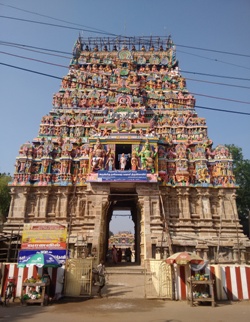
Nageswaraswamy Temple, Kumbakonam
Nageswaraswamy Temple, Kumbakonam
The kathas of Nageswaraswamy Temple, Kumbakonam: Sthala Purana, Folk legend — 2 stories cited to the Puranas, epics, recorded history and living tradition. The place is in Thanjavur, Tamil Nadu, India. KathaYatra keeps them here in Hindi and English, free to read.
- State
- Tamil Nadu
- District
- Thanjavur
- Altitude
- 24 m · 79 ft
- Coordinates
- 10.983°N, 79.367°E
Sthala Purana 1
स्थल-पुराणNageswaraswamy Temple, Kumbakonam — Where the Serpent Who Carries the Earth Found Strength
नागेश्वरस्वामी मंदिर, कुंभकोणम — जहाँ शेषनाग ने पाया नया बल
Tevaram era (7th-8th century CE, per Sambandar, Appar, Sundarar); temple built 9th century CE
Adisesha, the great serpent who is said to bear the entire weight of the earth upon his hood, is remembered here as having once grown weary under that burden. Tradition holds that he came to this forest, then called Kuvivanam, and undertook penance until Parvati herself appeared and blessed him with renewed strength. That memory gives the temple's sacred tank its name, Naga Theertham, and gathers around it further tellings of the serpent-kings Dakshan and Kaarkotakan, and of King Nala, all said to have worshipped Shiva at this same spot.
Here Shiva is Nageswaran, the Lord who took the form of Nagaraja, the serpent king, and the temple is also known by two older names, Kudanthai Keezhakottam and Surya Kottam. Beside him, the goddess Periyanayagi holds one of the complex's most prominent shrines. Built in the ninth century under the Chola king Aditya I, the temple is celebrated even today for a feat of astronomical precision: during the Tamil month of Chithirai, sunlight is engineered to fall directly upon the sanctum.
All three principal Nayanars — Sambandar, Appar, and Sundarar — sang of this shrine, sealing its place among the Paadal Petra Sthalams.
— as told in the Tevaram of Sambandar, Appar, and Sundarar (sthala purana per local tradition)
पढ़ें हिन्दी में
आदिशेष, वह महानाग जिनके फणों पर समस्त पृथ्वी का भार टिका माना जाता है, यहाँ उस भार से एक बार थक जाने की स्मृति के साथ पूजित हैं। परंपरा कहती है कि वे इस वन में आए, जो तब कुविवनम् कहलाता था, और तपस्या की, यहाँ तक कि स्वयं पार्वती प्रकट होकर उन्हें नवीन शक्ति का आशीर्वाद दें। इसी स्मृति से मंदिर के पवित्र तालाब का नाम नाग तीर्थम् पड़ा, और इसके साथ नागराज दक्षन और कार्कोटकन, तथा राजा नल की कथाएँ भी जुड़ती हैं, जिन सभी ने इसी स्थान पर शिव की आराधना की मानी जाती है।
यहाँ शिव नागेश्वरन् कहलाते हैं — वह स्वरूप जिसमें उन्होंने नागराज का रूप धारण किया — और मंदिर दो पुराने नामों, कुडंदै कीळक्कोट्टम् और सूर्य कोट्टम्, से भी जाना जाता है। उनके पास्व में देवी पेरियनायगी का मंदिर परिसर के सबसे प्रमुख मंदिरों में गिना जाता है। नौवीं शताब्दी में चोल राजा आदित्य प्रथम के काल में निर्मित यह मंदिर आज भी अपनी खगोलीय सटीकता के लिए विख्यात है: तमिल महीने चित्तिरै में सूर्य की किरणें सीधे गर्भगृह पर पड़ने की रचना की गई है।
तीनों प्रमुख नायनार — संबंदर, अप्पर और सुंदरर — ने इस मंदिर का गान किया, जिसने इसे पाडल पेत्र स्थलम् में स्थान दिलाया।
— संबंदर, अप्पर और सुंदरर के तेवारम् के अनुसार (स्थलपुराण स्थानीय परंपरा अनुसार)
Sources
- Sambandar (10 patikams), Appar (12 patikams), Sundarar (7 patikams), Tevaram
- Local sthala purana of Adisesha's penance at Kuvivanam — tradition
Folk legend 1
लोक-कथाNageswaraswamy Temple, Kumbakonam — The One-Day Circuit Against a Shadow Planet
नागेश्वरस्वामी मंदिर, कुंभकोणम — छाया ग्रह के विरुद्ध एक दिन की परिक्रमा
undated local belief; living pilgrim custom
The temple's remembered katha tells of Adisesha, weary under the whole earth's weight, finding renewed strength through Parvati's grace at this forest once called Kuvivanam. That story explains the sacred tank, Naga Theertham, and its name.
A different, still-living belief has grown around the same shrine: this is counted among the Navagraha temples, home to Rahu, the shadow planet blamed in popular belief for misfortune no ordinary cause explains. Pilgrims troubled by Rahu-Ketu dosha are said to follow a demanding, single-day circuit — worshipping Rahu here at Kumbakonam in the morning, then travelling on to complete prayers at three further temples before the day ends, believing the affliction lifts only if the full circuit is walked without a night's rest between. Older still is the memory that King Nala himself, cursed and afflicted, worshipped Shiva at this very spot, as he is remembered to have done at Thirunallar — and that the serpent-kings Dakshan and Kaarkotakan came here too, seeking the same relief a modern pilgrim seeks today.
Kings, serpents, and ordinary devotees, centuries apart, are said to have walked the same ground for the same reason: to lay down a burden no human effort could lift alone.
— local tradition of the Kumbakonam Rahu circuit
पढ़ें हिन्दी में
मंदिर की स्मरणीय कथा आदिशेष की है, जो पृथ्वी के समस्त भार से थके हुए, इस वन में — जो कभी कुविवनम् कहलाता था — पार्वती की कृपा से नवीन शक्ति पाते हैं। यह कथा पवित्र तालाब, नाग तीर्थम्, और उसके नाम की व्याख्या करती है।
एक भिन्न, आज भी जीवित मान्यता इसी मंदिर के इर्द-गिर्द उगी है: यह नवग्रह मंदिरों में गिना जाता है, राहु का निवास, वह छाया-ग्रह जिसे लोक-मान्यता में उन दुर्भाग्यों का दोष दिया जाता है जिनका कोई साधारण कारण नहीं मिलता। राहु-केतु दोष से पीड़ित तीर्थयात्री एक कठिन, एकदिवसीय परिक्रमा करते हैं, कहा जाता है — सुबह यहाँ कुम्भकोणम् में राहु की पूजा, फिर दिन समाप्त होने से पहले तीन और मंदिरों में प्रार्थना पूर्ण करना, यह विश्वास लिए कि पीड़ा तभी उतरती है जब पूरी परिक्रमा बीच में एक भी रात्रि-विश्राम लिए बिना पूरी की जाए। और भी पुरानी स्मृति यह है कि स्वयं राजा नल, शापित और पीड़ित, यहीं शिव की आराधना करते थे, जैसा उन्हें तिरुनल्लार में भी स्मरण किया जाता है — और नागराज दक्षन और कार्कोटकन भी यहाँ आए, वही राहत खोजते हुए जो आज का तीर्थयात्री खोजता है।
राजा, नाग, और साधारण भक्त, सदियों की दूरी पर, कहा जाता है कि एक ही कारण से इसी भूमि पर चले — वह भार उतारने जिसे कोई मानवीय प्रयास अकेले नहीं उठा सकता।
— कुम्भकोणम् की राहु-परिक्रमा की स्थानीय परंपरा के अनुसार
Sources
- Local tradition: Nageswaraswamy as Rahu sthalam and the single-day Rahu-Ketu dosha pilgrimage circuit; King Nala and the serpents Dakshan and Kaarkotakan
Keep reading
Paadal Petra Sthalam circuit
- 108 Divya desams
- Aakkoor Thanthondreeswarar Temple
- Aavoor Pasupatheeswaram temple
- Abirameswarar temple
- Achalpuram Shivalokathyagar Temple
- Adhi Ratneswarar Temple
- Adi Kumbeswarar Temple
- Agastheeswarar Temple