Place · Pune, Maharashtra, India
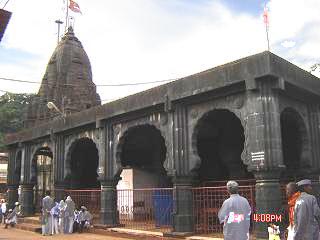
Bhimashankar Temple
भीमाशंकर मंदिर
The kathas of Bhimashankar Temple: Scripture, Folk legend — 2 stories cited to the Puranas, epics, recorded history and living tradition. The place is in Pune, Maharashtra, India. KathaYatra keeps them here in Hindi and English, free to read.
- State
- Maharashtra
- District
- Pune
- Altitude
- 919 m · 3,015 ft
- Coordinates
- 19.072°N, 73.536°E
Scripture 1
शास्त्रBhimashankar — Where the Lord Sweated a River into Being
भीमाशंकर मंदिर — जहाँ प्रभु के पसीने से नदी जन्मी
puranic
Long penance can buy dangerous gifts. The demon Tripurasura performed such austerities that Brahma granted him three flying citadels — one of gold, one of silver, one of iron, moving through the three worlds — and near-total invulnerability besides. No god, no demon, no spirit of earth or sky could touch him. Armed with that, Tripurasura did what such power always tempts a being to do: he turned on the heavens themselves, humbling even Indra, king of the gods.
Indra came to Shiva with nothing left but penance and a plea. Shiva, tradition tells, made a vow that day to end Tripurasura — but a boon like Brahma's cannot be undone by half-measures. It took Shiva himself, assembled with the gods' combined strength, to become the warrior he is here named for: Bhima, "the terrible one." In this form, in these Sahyadri hills, he met Tripurasura's three flying cities in a battle said to have shaken the three worlds, and brought them and their master down in a single, final blow — the same act remembered elsewhere as Tripurantaka, "ender of the three cities."
What was left of that fight was not only victory. The sweat that poured from Shiva's body in the heat of that battle is said to have run down these hills and become a river — the Bhimarathi, which still flows from near this temple. And where the Lord stood when it was over, the jyotirlinga of Bhimashankar remains: one of the twelve, self-manifest, in a temple tucked deep in forest that pilgrims still climb hills and cross streams to reach.
— as told in the Shiva Purana (Koti Rudra Samhita)
पढ़ें हिन्दी में
लंबी तपस्या कभी-कभी खतरनाक वरदान भी दिला देती है। असुर त्रिपुरासुर ने ऐसी तपस्या की कि ब्रह्मा ने उसे तीन उड़ते हुए नगर दिए — एक सोने का, एक चाँदी का, एक लोहे का, जो तीनों लोकों में विचरण करते थे — साथ ही लगभग पूर्ण अजेयता भी। न देवता, न असुर, न धरती या आकाश की कोई शक्ति उसे छू सकती थी। इस बल से त्रिपुरासुर ने वही किया जो ऐसी शक्ति सदा करने को उकसाती है — उसने स्वर्ग पर ही आक्रमण कर दिया, स्वयं इंद्र तक को झुका दिया।
इंद्र शिव के पास तपस्या और प्रार्थना के सिवा कुछ लेकर नहीं पहुँचे। परंपरा कहती है, शिव ने उसी दिन त्रिपुरासुर के अंत की प्रतिज्ञा ली — पर ब्रह्मा जैसे वरदान को अधूरे प्रयास से नहीं तोड़ा जा सकता। स्वयं शिव को, देवताओं की समस्त शक्ति समेटकर, वह योद्धा-रूप धारण करना पड़ा जिससे यह स्थान नाम पाता है — भीम, "भयंकर"। इसी रूप में, इन्हीं सह्याद्रि पर्वतों में, उन्होंने त्रिपुरासुर के तीनों उड़ते नगरों का सामना किया — ऐसा युद्ध जिसने कहते हैं तीनों लोकों को हिला दिया — और एक ही अंतिम प्रहार से उन्हें और उनके स्वामी को समाप्त कर दिया, वही कर्म जो अन्यत्र त्रिपुरांतक — "तीन नगरों का अंतकर्ता" — नाम से स्मरण किया जाता है।
उस युद्ध से केवल विजय ही शेष नहीं बची। उस संघर्ष की तपिश में शिव के शरीर से बहा पसीना, कहते हैं, इन्हीं पहाड़ों से बहकर एक नदी बन गया — भीमरथी, जो आज भी इस मंदिर के निकट से बहती है। और जहाँ युद्ध की समाप्ति पर भगवान खड़े थे, वहीं आज भी भीमाशंकर का ज्योतिर्लिंग विराजमान है — बारह ज्योतिर्लिंगों में एक, स्वयंभू, घने वन में बसा वह मंदिर जहाँ तीर्थयात्री आज भी पहाड़ चढ़कर और नदियाँ पारकर पहुँचते हैं।
— शिव पुराण (कोटिरुद्र संहिता) के अनुसार
Sources
- Shiva Purana, Koti Rudra Samhita, Tripurasura episode
- Skanda Purana, Sahyadri Khanda
Folk legend 1
लोक-कथाBhimashankar — The Goddess Who Stood Beside Him
भीमाशंकर मंदिर — वह देवी जो उनके साथ खड़ी रही
living tradition (Shakti Peeth association)
The scripture tells of Shiva alone becoming Bhima to break Tripurasura's three flying cities. Local tradition at the temple does not leave him alone in that telling.
It is said that beside the jyotirlinga, within the same temple grounds, stands the smaller shrine of Kamalaja Devi — held here to be Parvati herself, present through the whole battle, not as a bystander but as strength Shiva drew on to finish what a boon from Brahma had made nearly unbreakable. Devotees at Bhimashankar count this ground among the Shakti Peethas for exactly that reason: not for a body part of the goddess falling here, as at other Peethas, but for her having stood her ground beside her husband when even the gods together could not.
Pilgrims who climb through the forest to the jyotirlinga are told, by long custom, to complete their darshan at Kamalaja's shrine as well — not as an afterthought, but because the local telling holds that Bhimashankar was never a victory won by one alone. Some who tend the temple say the goddess was worshipped here first, with lotuses, even before the linga was known by its present name — though this detail, like much at Bhimashankar, survives only in what the temple's own keepers pass down.
— as locally told at the Kamalaja Devi shrine, Bhimashankar temple precinct, Maharashtra
पढ़ें हिन्दी में
शास्त्र कहता है कि त्रिपुरासुर के तीनों उड़ते नगरों को तोड़ने के लिए शिव अकेले भीम रूप धरते हैं। पर मंदिर की स्थानीय परंपरा उन्हें इस कथा में अकेला नहीं छोड़ती।
कहा जाता है कि ज्योतिर्लिंग के ठीक पास, उसी परिसर में, कमलजा देवी का छोटा मंदिर है — जिन्हें यहाँ साक्षात् पार्वती माना जाता है, संपूर्ण युद्ध में साथ खड़ी — मात्र दर्शक नहीं, बल्कि वह शक्ति जिसे शिव ने उस वरदान को तोड़ने के लिए बटोरा जो ब्रह्मा ने त्रिपुरासुर को लगभग अभेद्य बना दिया था। भीमाशंकर के भक्त इसी कारण इस स्थान को शक्तिपीठों में गिनते हैं — अन्य शक्तिपीठों की तरह देवी के किसी अंग के गिरने के कारण नहीं, बल्कि इसलिए कि जब देवता मिलकर भी असमर्थ थे, तब देवी अपने पति के साथ अडिग खड़ी रहीं।
जो यात्री वन पार कर ज्योतिर्लिंग तक पहुँचते हैं, उन्हें पुरानी रीति के अनुसार कमलजा देवी के दर्शन भी पूर्ण करने को कहा जाता है — यह कोई औपचारिकता नहीं, बल्कि स्थानीय मान्यता है कि भीमाशंकर कभी अकेले जीता गया युद्ध नहीं था। मंदिर के कुछ सेवक तो यह भी कहते हैं कि देवी की पूजा यहाँ लिंग के वर्तमान नाम से भी पहले, कमल के फूलों से होती थी — पर यह विवरण, भीमाशंकर की कई बातों की तरह, केवल मंदिर के परंपरा-वाहकों की स्मृति में ही बचा है।
— महाराष्ट्र के भीमाशंकर मंदिर परिसर की कमलजा देवी मंदिर की स्थानीय परंपरा के अनुसार
Sources
- Kamalaja Devi shrine tradition, Bhimashankar temple precinct — Kamalaja as Shakti Peeth, aide of Shiva against Tripurasura
Keep reading
Jyotirlinga circuit
- Aundha Nagnath Temple
- Bhimashankar Jyotirlinga (Dakinyam), Bhimpur
- Bhimeswar Dham
- Grishneshwar temple
- Kashi Vishwanath Temple
- Kedarnath Temple
- Mahakaleshwar Jyotirlinga
- Mallikarjuna Temple