स्थल · राजस्थान, भारत
श्रीनाथजी मंदिर, नाथद्वारा
Shrinathji Temple, Nathdwara
श्रीनाथजी मंदिर, नाथद्वारा की कथाएँ: स्थल-पुराण, लोक-कथा — कुल 2 कथाएँ, पुराणों, महाकाव्यों, इतिहास और जीवित लोक-परंपरा से स्रोत-सहित। यह स्थल राजस्थान, भारत में है। कथायात्रा इन्हें हिन्दी और अंग्रेज़ी दोनों में निःशुल्क प्रस्तुत करता है।
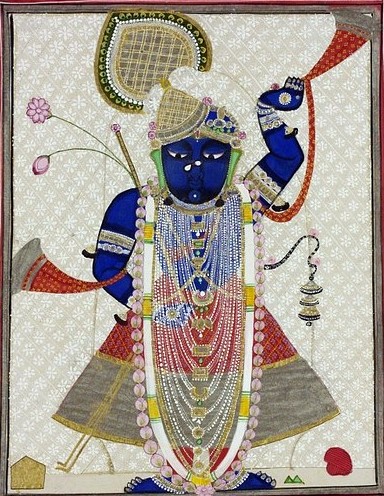
स्थल-पुराण 1
Sthala Puranaश्रीनाथजी मंदिर, नाथद्वारा — पहिए जिन्होंने फिर चलने से इनकार कर दिया
Shrinathji Temple, Nathdwara — The Wheels That Refused to Move Again
swayambhu manifestation, Braj (undated tradition); flight and enshrinement 1672 CE
श्रीनाथजी की मूर्ति को स्वयंभू माना जाता है — तराशी हुई नहीं, बल्कि गोवर्धन पर्वत की चट्टान से स्वयं प्रकट हुई, उस रूप में जो कृष्ण ने सात वर्ष की आयु में इंद्र के प्रकोप से पर्वत उठाकर रक्षा करते समय धारण किया था। पीढ़ियों तक इसकी पूजा मथुरा के निकट ब्रज में होती रही, जहाँ पुष्टिमार्ग — "अनुग्रह का मार्ग" — के प्रवर्तक वल्लभाचार्य ने इसे पहले गोपाल नाम दिया और इसके स्थान को गोपालपुर कहा; बाद में उनके पुत्र विट्ठलनाथजी ने इसका नाम श्रीनाथजी रखा और आठ बार के दैनिक दर्शन की वह विस्तृत परंपरा गढ़ी जो आज भी निभाई जाती है।
1672 में, जब औरंगज़ेब के अभियानों से ब्रज के मंदिरों पर संकट गहराया, तो देवता के रखवालों ने कठिनतम निर्णय लिया — विनाश से पहले श्रीनाथजी को सुरक्षित स्थान ले जाना। मूर्ति रथ पर दक्षिण की ओर चली, लगभग छह माह आगरा के निकट ठहरी, फिर राजस्थान की भूमि से होते हुए किसी स्थायी और सुरक्षित ठिकाने की खोज में आगे बढ़ती रही।
वह ठिकाना स्वयं मिल गया। मेवाड़ के सिहड़ गाँव में रथ के पहिए कीचड़ में ऐसे धँसे कि किसी प्रयास से न निकले। पुजारियों ने इसे स्पष्ट संकेत माना — श्रीनाथजी ने स्वयं अपना विश्राम-स्थान चुन लिया था — और मेवाड़ के महाराणा राजसिंह ने संरक्षण देकर वहीं वह मंदिर बनवाया जो आज भी खड़ा है, उस स्थान पर जो अब नाथद्वारा — "प्रभु का द्वार" — कहलाता है।
— वल्लभाचार्य एवं विट्ठलनाथजी की पुष्टिमार्ग परंपरा के अनुसार
Read in English
The image of Shrinathji is held to be swayambhu — not carved but self-manifested, emerging from the rock of Govardhan Hill in the form Krishna is said to have taken at age seven, the arm raised to lift the mountain itself against Indra's storm. For generations it was worshipped near Mathura in the heart of Braj, first named Gopala and its shrine Gopalpur by Vallabhacharya, founder of the Pushtimarg — the "path of grace" — and later renamed Shrinathji by his son, Vitthalnathji, who shaped the elaborate eight-times-daily darshan still followed today.
In 1672, as Aurangzeb's campaigns against Braj's temples intensified, the deity's keepers made the hardest of decisions: to move Shrinathji to safety before it could be destroyed. The icon travelled south by chariot, sheltering some six months near Agra, before continuing on through Rajasthan's terrain in search of a place secure enough to become permanent.
That place found itself. At the village of Sihad in Mewar, the chariot's wheels sank into the mud and would not be freed by any effort. The priests read the sign plainly — Shrinathji had chosen his own resting ground — and Maharana Raj Singh of Mewar granted protection and built the temple that still stands there, in what is now called Nathdwara, "the gate of the Lord."
— as recorded in Pushtimarg tradition of Vallabhacharya and Vitthalnathji
स्रोत
- Pushtimarg tradition of Vallabhacharya and Vitthalnathji
- Nathdwara temple chronicle of the 1672 relocation
लोक-कथा 1
Folk legendश्रीनाथजी मंदिर, नाथद्वारा — जो आठ द्वार माँ ने कभी बंद किए
Shrinathji Temple, Nathdwara — Eight Doors a Mother Once Closed
undated Braj tradition, formalized by Vallabhacharya
श्रीनाथजी के नाथद्वारा पलायन की कथा हर तीर्थयात्री सबसे पहले सुनता है। इससे पुरानी, और अधिक कोमल, यह कथा है कि मंदिर के द्वार दिन में केवल आठ बार ही क्यों खुलते हैं — एक नियम जिसका औरंगज़ेब से कोई लेना-देना नहीं, बल्कि एक माँ की चिंता से है।
कहा जाता है कि ब्रज में, किसी रथ के दक्षिण भागने से बहुत पहले, गाँव की गोपियाँ बालक कृष्ण को इतनी सम्पूर्णता से चाहती थीं कि उन्हें विश्राम ही न लेने देतीं — किसी भी घड़ी आ पहुँचतीं, खेलने बुलातीं, खिलातीं, बार-बार निहारतीं। यशोदा, अपने पुत्र को इस अपार स्नेह के भार तले थकते देख, कहा जाता है निश्चित समय बाँध दिए — कुछ घड़ियाँ जब द्वार जगत के लिए खुलते, कुछ जब बंद हो जाते ताकि बालक सो सके, खा सके, निर्बाध बालक बना रह सके।
वल्लभाचार्य ने उसी लय को अनुष्ठान में ढाला, हवेली में दिन के आठ दर्शन नियत किए — मंगला, श्रृंगार, ग्वाल, राजभोग, उत्थापन, भोग, संध्या, शयन — हर एक मानो वही छोटा-सा द्वार, फिर से खोला गया। श्रीनाथजी की परंपरा मानने वाला हर मंदिर आज भी उसी माँ की तय की गई लय निभाता है, अधिकांश श्रद्धालु बिना यह पूछे कि ऐसा क्यों है।
— ब्रज की पुष्टिमार्ग परंपरा के अनुसार
Read in English
The story of Shrinathji's flight to Nathdwara is the one every pilgrim hears first. Older, and gentler, is the story of why the temple's doors open only eight times a day — a rule that has nothing to do with Aurangzeb and everything to do with a mother's worry.
It is said that in Vraj, long before any chariot fled south, the gopis of the village loved the boy Krishna so completely that they never let him rest — arriving at any hour, calling him out to play, to eat, to be looked at again and again. Yashoda, watching her son grow tired under the weight of so much devotion, is said to have set fixed hours: times when the doors would open for the world to see him, and times when they would close so the child could sleep, eat, and simply be a child undisturbed.
Vallabhacharya carried that rhythm into ritual, fixing eight darshans a day at the haveli — mangala, shringar, gwal, rajbhog, uthapan, bhog, sandhya, shayan — each one a small, closed door reopened. Every temple that follows Shrinathji still keeps that mother's timing, without most pilgrims ever asking why.
— as told in the Pushtimarg tradition of Vraj
स्रोत
- Pushtimarg tradition of Ashtayam — the eight daily darshans and their origin in Yashoda's fixed hours
आगे पढ़ें
राजस्थान में और
- अचलेश्वर महादेव मंदिर, अचलगढ़
- अंबिका माता मंदिर, जगत
- अर्बुदा देवी मंदिर, माउंट आबू
- बेणेश्वर धाम
- भानगढ़ किला
- भोमियाजी महाराज मंदिर, सोपरा
- ब्रह्मा मंदिर, पुष्कर
- चामुंडा माताजी मंदिर, मेहरानगढ़